Rescue breathing.
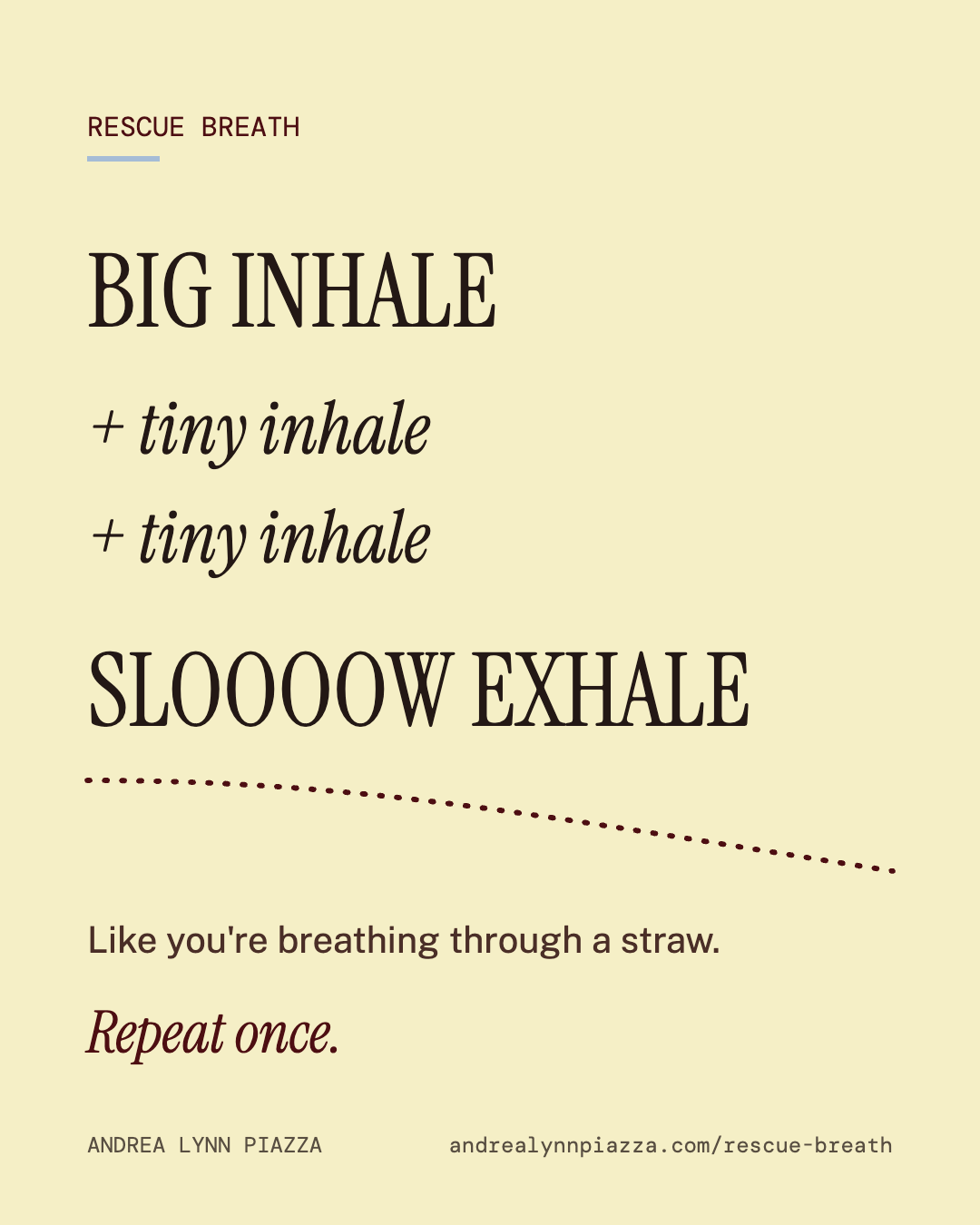
You don't need to remember a complicated breathing ratio. Big inhale, two little top-offs, slow exhale. That's it.
BIG INHALE → + SMALL INHALE → + SMALL INHALE → SLOW EXHALE
Do the whole thing twice.
Fill → top it off → top it off → slowly let it go. The exhale should feel comfortable, not forced.
When might I use this?
You might try a rescue breath when you notice yourself:
- crying and accidentally holding your breath
- breathing very shallowly
- feeling panicky or overwhelmed
- physically tense or stuck
- needing a quick reset before trying another coping skill
This is one tool for helping your body shift gears. It may help a lot sometimes and less at other times. That's normal.
Practice when you're okay, too.
Don't save this only for bad moments. Do a couple of rescue breaths now and then when you're already calm, so the sequence feels familiar and is easier to remember when you're overwhelmed. It also keeps your body from learning that this breath only shows up when things are bad.
What next?
After two rescue breaths, check in: how activated do I feel right now?
If the intensity has dropped even a little, move on to another skill rather than repeating the breath over and over.
If breathing exercises make you dizzy, uncomfortable or more anxious, stop and return to your normal breathing. This tool is for general education and coping support. It isn't emergency or medical care.